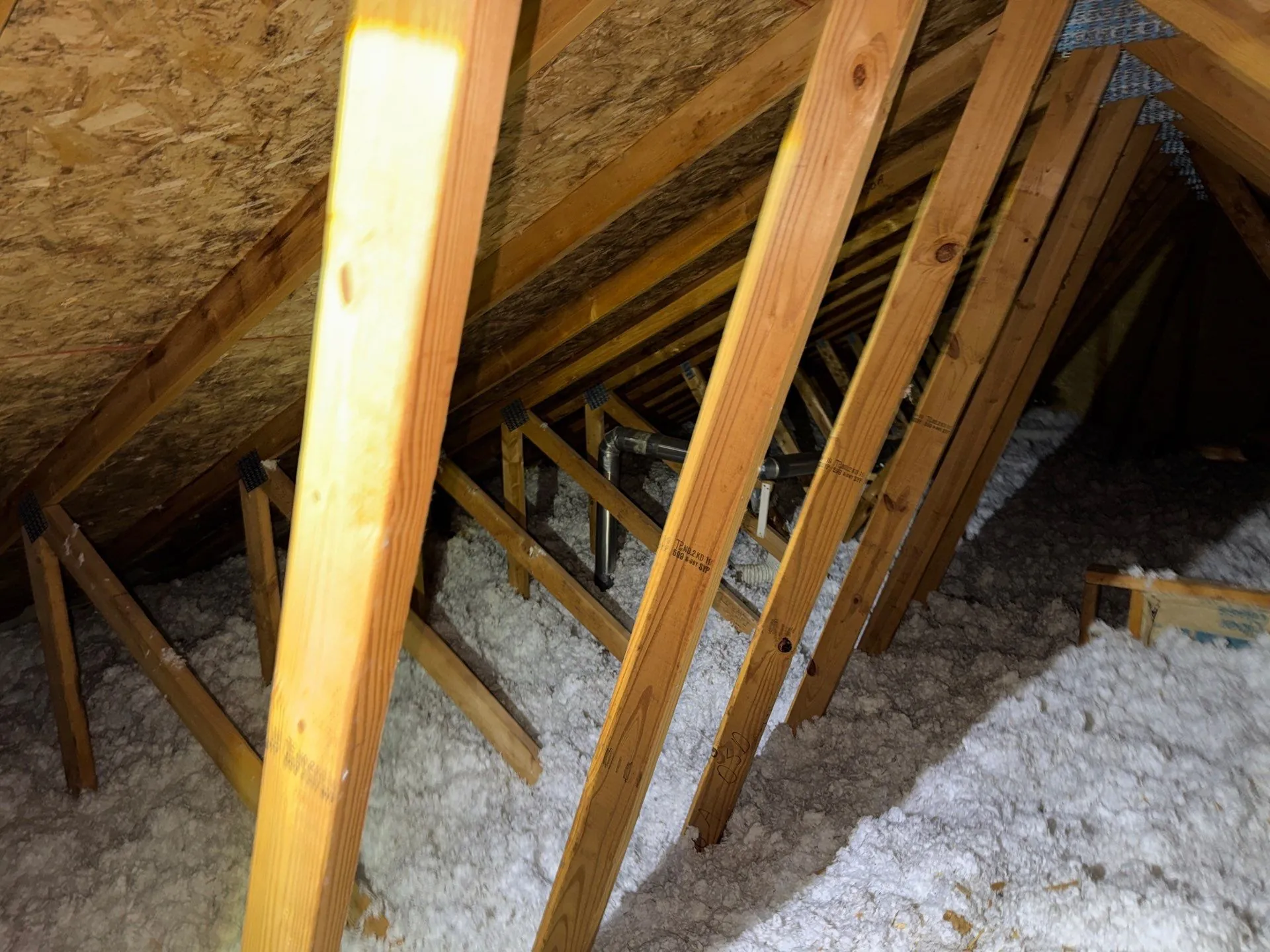
Most homeowners rarely think about their attic. It’s out of sight, used mostly for storage, and easy to forget about. But your attic plays a major role in your home’s health, especially when it comes to moisture control. Poor attic ventilation can quietly create the conditions that allow mold to grow, sometimes without homeowners realizing it until the problem spreads.
In homes across Ohio, seasonal temperature swings and winter snowmelt make attic moisture problems especially common. When attic ventilation isn’t functioning properly, humidity can build up, leading to the growth of green mold on wood surfaces, insulation, and roof sheathing.
Understanding the most common ventilation mistakes can help you prevent costly repairs and protect your indoor air quality.
Attic ventilation helps regulate temperature and moisture levels in the upper portion of your home. When warm air from inside the house rises into the attic, proper ventilation allows that moisture to escape instead of becoming trapped.
Without airflow, condensation forms on cold surfaces such as roof decking and rafters. Over time, that moisture creates an environment where mold can grow.
Proper attic ventilation typically relies on a balance of intake and exhaust airflow. Intake vents pull fresh air into the attic while exhaust vents allow warm, moist air to escape. When that balance is disrupted, moisture problems begin.
One of the most common attic ventilation issues occurs during insulation installation. Soffit vents, located along the edge of the roof, allow fresh air to enter the attic. But if insulation blocks these vents, airflow stops.
Without intake ventilation, moisture from the home can’t escape. Warm air rises into the attic and becomes trapped, eventually leading to condensation and mold growth.
Many homes with blocked soffit vents develop green mold on the roof decking or rafters during the winter months when warm interior air meets cold attic surfaces.
Some homes simply don’t have enough ventilation installed. Older houses, in particular, were often built without adequate attic airflow systems.
Signs of insufficient ventilation include:
If warm air consistently collects in the attic, moisture will accumulate. Over time, this increases the risk of green mold forming in hidden areas above your ceiling.
Bathroom exhaust fans are designed to remove moisture from showers and baths. But in some homes, these fans vent directly into the attic instead of outside.
This mistake sends warm, humid air straight into an enclosed space. During winter, the moisture condenses on roof decking and rafters, creating the perfect conditions for mold growth.
In many cases, homeowners don’t realize this is happening until an attic inspection reveals mold spreading along the underside of the roof.
Roof vents allow hot air to exit the attic. However, poorly installed vents or insufficient exhaust ventilation can limit airflow.
Without proper exhaust, warm, moist air becomes trapped. This leads to condensation and eventually mold growth. Even homes with new roofs can develop problems if the ventilation design wasn’t properly calculated.
A balanced attic ventilation system ensures air enters through soffits and exits through ridge or roof vents.
Many homeowners assume attic mold stays confined to that space, but that’s not always the case. Air moves throughout the structure of a home, and mold spores can travel with it.
That means mold in the attic may impact the air circulating through your living space. Families sometimes notice musty odors, allergy symptoms, or respiratory irritation without realizing the source is above the ceiling.
When green mold appears in the attic, it’s often a signal that moisture control throughout the home needs attention.
Preventing mold starts with proper ventilation and moisture management.
Homeowners can reduce risk by:
If mold has already formed, the underlying moisture issue must be corrected or the growth will likely return. In some cases, professional mold remediation may be the next step.
Attic problems often go unnoticed until they become serious. Something as simple as blocked vents or improper fan installation can create the conditions for mold growth above your living space.
By understanding how attic ventilation works and avoiding common mistakes, homeowners can protect their homes from hidden moisture problems. If you notice musty odors or signs of mold, a professional inspection can help identify the source and prevent further damage. You can also contact Farsight for help.

At Farsight Management we understand that not all indoor air quality companies are created equal.
We feel that it is imperative to educate ourselves, our employees, and our customers. You can trust that we follow all the national standards in regards to indoor air quality. This includes mold remediation, lead abatement, asbestos removal, and everything that we do.