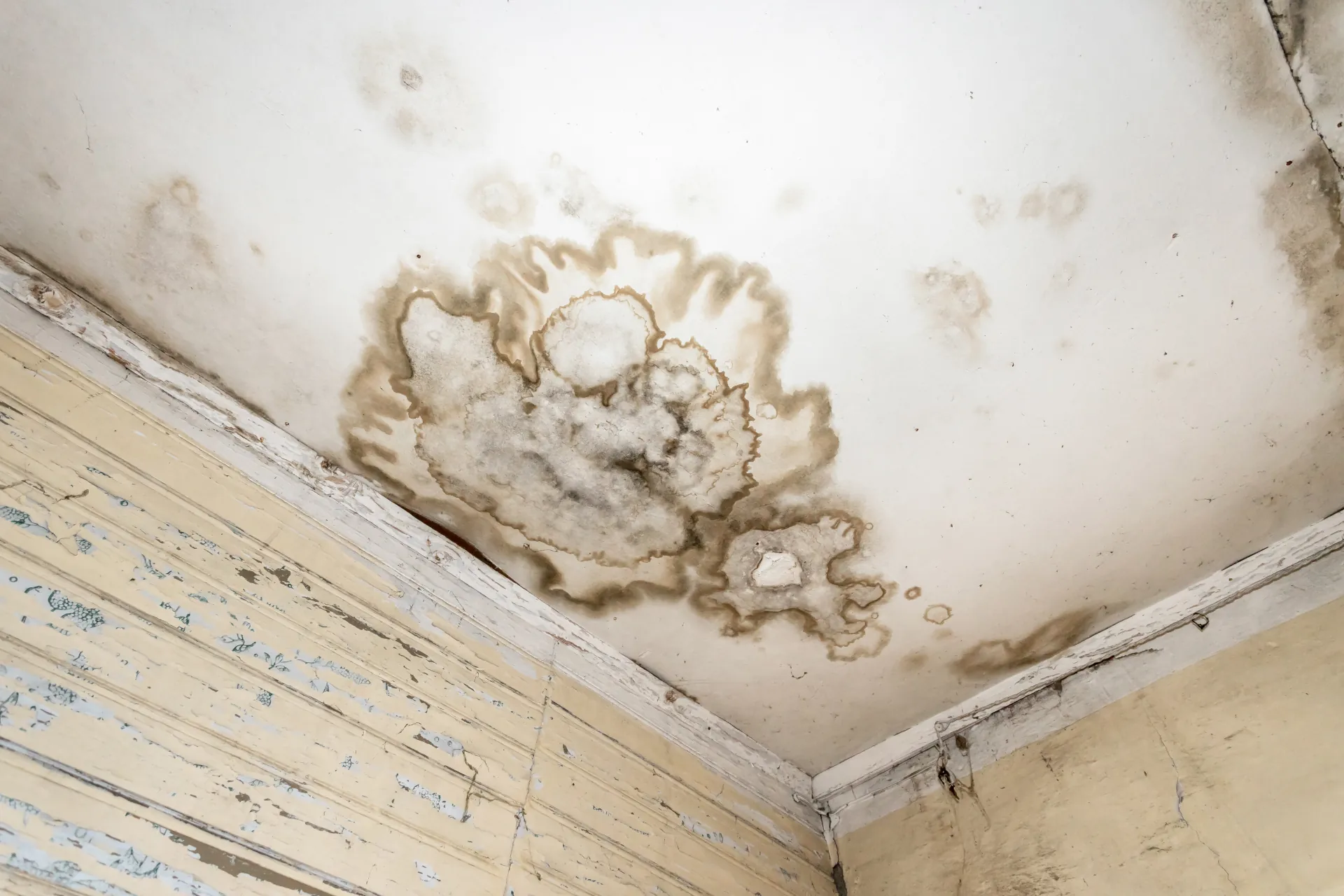
When you notice spots or stains creeping across a bathroom wall, ceiling corner, or basement floor, your first question is probably: Is that mildew, or is it mold?
It’s a good question and an important one. While both mildew and mold thrive in moist environments, they’re not the same. Knowing the difference can help you catch problems early and avoid bigger health or structural issues down the line.
In this post, we’ll answer the question “what does mildew look like?” and walk through how to tell whether you’re dealing with a cosmetic surface issue or a more serious mold concern.
Mildew is a type of fungus, like mold, but it tends to grow only on surfaces and doesn’t penetrate materials the way mold does. It’s most often found in damp, high-humidity areas like showers, windowsills, and laundry rooms. It typically looks flat and powdery and is easier to clean than mold.
Mildew usually appears:
It often starts in corners or along grout lines and gradually expands in size. Mildew doesn’t have much of an odor and is generally considered less harmful than mold, though it can still cause mild allergic reactions.
If you wipe away a spot with mild soap and water and it disappears easily, it was likely mildew.
While mildew tends to stay on the surface, mold is more aggressive. It can grow into porous materials like drywall, wood, and insulation, and it often comes back if you don’t address the underlying moisture issue.
If what you’re seeing is:
One common form of household mold is green mold. It often shows up in bathrooms or basements during or after the winter holidays when homes are sealed tight and moisture builds up from hot showers or poor ventilation. Unlike mildew, green mold can be more than a cosmetic issue. It may affect your air quality or signal a deeper moisture problem inside your home’s walls or structure.
Many homeowners ask, “is green mold dangerous?” While not all green mold species are toxic, their presence still signals excess moisture, and that’s something you don’t want to ignore.
Here’s a quick comparison:

If you’re unsure, it’s best to err on the side of caution, especially if you’re seeing green mold in areas like bathrooms, closets, or under sinks.
If the area is large, keeps coming back, or you suspect hidden mold behind walls or under floors, call a professional. Mold remediation specialists can identify the root cause and help prevent further spread. If you are still not sure what you are looking at, start with this guide: Is that mold or just a stain?
Whether it’s mildew or mold, prevention comes down to moisture control. Here’s what helps:
Also consider installing a humidity monitor to track indoor levels. Keeping relative humidity between 30% and 50% is ideal for mold and mildew prevention. If you want a simple way to stay ahead of moisture problems, read Monitoring The Moisture In Your Home.
It’s easy to dismiss small spots in the bathroom or basement as harmless mildew, but they may be early signs of mold, especially if they’re green, fuzzy, or spreading quickly. Understanding what mildew looks like, and how it differs from mold, helps you take the right action before minor problems turn into major ones.
If you’re seeing recurring growth, or you’re unsure whether it’s mildew or something more serious, don’t guess. It might be time for a professional moisture inspection or mold assessment to get clarity and peace of mind. Contact us today!

At Farsight Management we understand that not all indoor air quality companies are created equal.
We feel that it is imperative to educate ourselves, our employees, and our customers. You can trust that we follow all the national standards in regards to indoor air quality. This includes mold remediation, lead abatement, asbestos removal, and everything that we do.