Mold and bacteria don't always show up where you'd expect, and traditional testing doesn't always capture the full picture. When you're trying to understand what's happening inside a home or building, having accurate information matters.
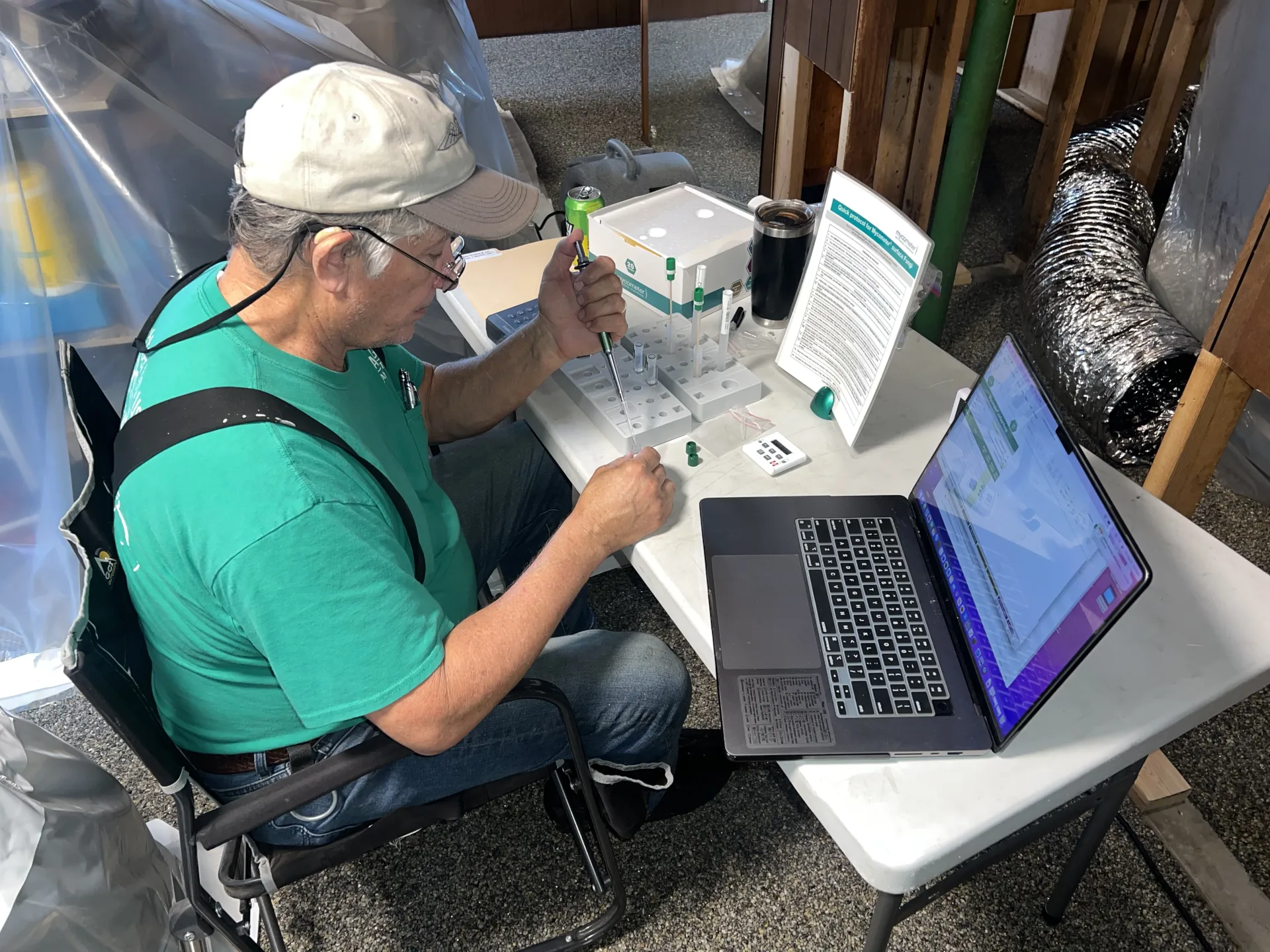
Mycometer testing takes a different approach. Instead of looking primarily for spores, it measures the total biomass of fungi, bacteria, and allergens in air and surface samples by detecting the unique enzymes these organisms produce. For homeowners, that can provide another valuable piece of information when trying to identify a potential indoor environmental problem.
Mycometer equipment provides a testing method that can measure the total biomass of fungi, bacteria, and allergens. It can test both air and surface samples for each of these contaminants by measuring the unique enzymes they produce. Enzymes are a type of protein that helps chemical reactions occur. They act as catalysts and don't break down, so enzyme levels in the biomass stay constant, leading to a more accurate measurement.
One of the biggest benefits of Mycometer testing is speed.
Instead of sending samples to a laboratory and waiting several days for results, Mycometer samples can be analyzed onsite. Results can often be available within an hour, giving professionals information they can use while they are still evaluating the property.
Mycometer is approved for use by NASA and the Department of Defense specifically, for determining presence of mold/bacteria and evaluating facility cleanliness.
Analysis results are reported in categories representing concentrations ranging from low to high. A low category indicates a cleaner environment with little contamination detected, while higher categories indicate increasing levels of contamination.
To operate Mycometer equipment, an individual must complete the manufacturer's training course for each type of contaminant being tested. Some sampling materials must also be refrigerated, so proper preparation and handling are important.
When a consultant samples the air or collects a tape lift, laboratory results may show mold spores in the thousands while mold colony growth structures, reported as hyphal fragments, are found in the hundreds.
But spores aren't necessarily the entire story because biomass consists of far more hyphal fragments than spores. Labs will always report more spores than hyphal fragments. Mycometer measures both.
Mold spores are created on the growth structures of mold colonies called hyphae, similar to the way a tree or bush produces nuts or seeds.
If you compare the number of seeds produced by a tree or bush to the total volume of the plant itself, you can begin to see the difference.
Traditional sampling may capture/count the "seeds" (spores), but considerably more fungal material can be present in the environment because these methods rely on material adhering to a sticky plate during sampling — and much of that material can bounce off or fail to make contact.
This distinction matters because hyphal structures can contain substances capable of contributing to respiratory irritation and allergic reactions when inhaled.
Mycometer approaches the problem differently. It measures enzymes that occur in a predictable relationship to the amount of biomass present in the sample.
That gives indoor air quality professionals another way to evaluate the extent of fungal contamination rather than relying solely on the number of spores captured in a sample.
One of the primary methods currently used by indoor air quality consultants is an inertial impact plate, commonly referred to as a spore trap.
Spore traps have a long history of use and can provide useful information, but the method also has limitations.
Factors such as the design of the impact plate, the size and shape of airborne particles, and continued airflow over the plate during sampling can influence what is ultimately collected.
For those interested in the technical details, ACGIH discusses these limitations in Bioaerosols: Assessment and Control, Section 7.5.2, "Inertial Impaction."
Mycometer doesn't necessarily replace every other form of testing. Instead, it gives professionals another tool for understanding what's happening in an indoor environment.
For Farsight, adding Mycometer equipment isn't about having another piece of technology. It's about having another way to get reliable information when a homeowner or facility manager needs answers.
We can use Mycometer testing to help guide an Indoor Air Quality Assessment, evaluate fungal, bacterial, or allergenic contamination, and document the cleanliness of a facility.
Our testing can provide additional information about whether the process was effective. In situations involving flooding or sewage backups, for example, Mycometer testing can help evaluate whether bacterial contamination has been adequately addressed.
If something feels wrong in your home, the answer isn't always obvious.
You may notice a musty smell without seeing mold. You may have experienced water damage and want to know whether cleanup was successful. Or you may simply want more information about the indoor environment before deciding what to do next.
Mycometer gives the Farsight team another technical tool to investigate those concerns.
With the ability to evaluate fungi, bacteria, and allergens and analyze samples in the field, we can gather additional information quickly and use it alongside our experience and other assessment methods to better understand the problem.
For our clients, that means less guesswork and more information to help determine the right next step.
If you have concerns about mold, bacteria, allergens, or the overall air quality in your home, Farsight can help you understand what's happening and what, if anything, needs to be done.

At Farsight Management we understand that not all indoor air quality companies are created equal.
We feel that it is imperative to educate ourselves, our employees, and our customers. You can trust that we follow all the national standards in regards to indoor air quality. This includes mold remediation, lead abatement, asbestos removal, and everything that we do.