Mold is a problem few homeowners want to face, but many eventually do. Especially in Northeast Ohio, the seasonal humidity, heavy rainfall, and older homes breed ideal conditions for mold growth.
If you've discovered mold in your home or suspect it may be hiding behind walls or beneath flooring, you may be wondering what comes next. Understanding the mold removal process can help you make informed decisions and avoid solutions that don't actually solve the problem.
If you're searching for mold removal in Ohio, here's what you should expect from a professional remediation company.
One of the biggest misconceptions about mold is that cleaning the visible growth solves the problem.
In reality, mold is almost always the result of excess moisture, commonly caused by:
Unless the source of the moisture is identified and corrected, mold is likely to return.
That's why a professional assessment is the first step. Rather than simply treating what can be seen, experienced inspectors look for the conditions allowing mold to grow in the first place.
Every home is different, but a thorough inspection typically includes:
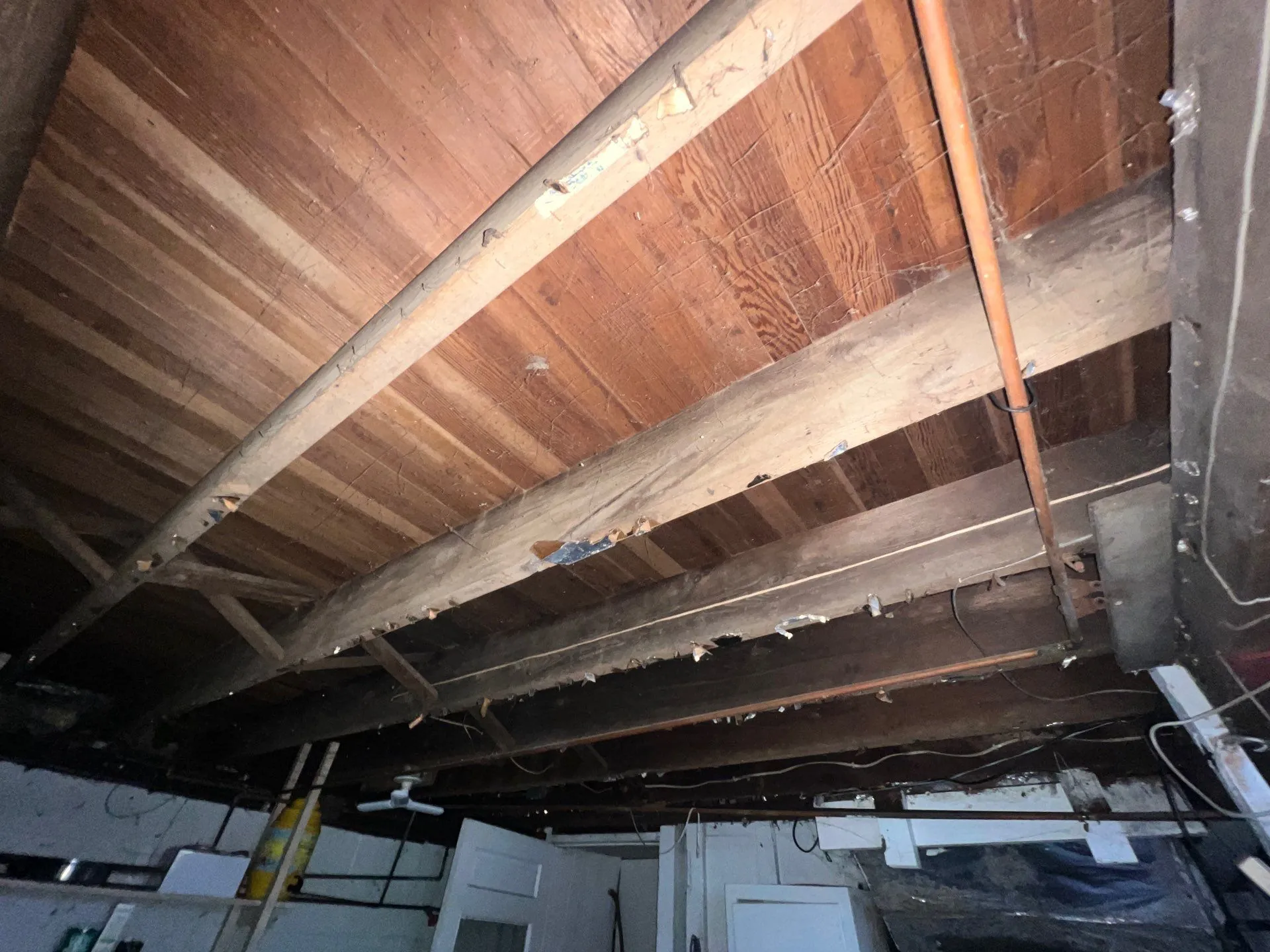
Many homeowners are surprised to learn that mold isn't always visible. It often develops behind drywall, beneath flooring, inside crawl spaces, or in attics where moisture can remain unnoticed for long periods.
The goal isn't simply to find mold. It's to understand why it's there. If you want to read more on this process, we have a 4 part blog series on The Preparation of Mold Remediation Protocols.
Once mold remediation begins, preventing spores from spreading throughout the home becomes a top priority.
Professional remediation companies such as Farsight establish containment barriers around the affected area before work begins. This helps keep mold spores from traveling into clean areas of the home during removal.
Specialized air filtration equipment and negative air pressure systems are commonly used throughout the remediation process to capture airborne particles and improve indoor air quality while work is being completed.
Proper containment protects both your home and your family.
Depending on the extent of contamination, remediation may involve removing materials that cannot be safely cleaned.
Examples include:
Non-porous surfaces that can be safely cleaned are thoroughly sanitized using industry-approved methods.
The exact approach depends on the type of material and how deeply the mold has penetrated.
Many homeowners researching mold removal come across advertisements for mold fogging. While it may sound like an easy solution, it's important to understand what fogging can and cannot do.
Mold fogging involves dispersing a treatment throughout an affected area. While it may help reduce airborne spores or disinfect exposed surfaces, it does not remove mold that has grown inside drywall, insulation, wood, or other porous materials.
More importantly, fogging does not eliminate the moisture source that allows mold to grow.
If leaks, condensation, or excess humidity remain, mold is likely to return.
For that reason, mold fogging should never replace proper remediation. At best, it may serve as a supplemental step after contaminated materials have been addressed, not as the primary solution.
Professional remediation doesn't end once the visible mold is gone.
The final step is verification.
This may include visual inspections, moisture confirmation, and other post-remediation evaluations to ensure the work was completed effectively.
Verification provides homeowners with confidence that the remediation process addressed both the mold and the conditions that caused it.
Not every company approaches mold remediation the same way.
At Farsight, we:
A reputable company should be willing to answer questions, explain its recommendations, and help homeowners understand what they're paying for.
Once remediation is complete, ongoing moisture control becomes the key to preventing future mold growth.
Homeowners can reduce risk by:
Routine maintenance can go a long way toward preventing future issues.
Finding mold in your home can feel overwhelming, but understanding the process helps remove much of the uncertainty.
Professional mold removal isn't simply about cleaning visible growth. It's about identifying the source of the moisture, safely removing contaminated materials, protecting the rest of the home during remediation, and verifying that the problem has been properly addressed.
If you're looking for mold removal in Ohio, Farsight Management focuses on lasting solutions, not quick fixes. A thorough assessment and a technically correct remediation process will provide far better results than simply treating what you can see.

At Farsight Management we understand that not all indoor air quality companies are created equal.
We feel that it is imperative to educate ourselves, our employees, and our customers. You can trust that we follow all the national standards in regards to indoor air quality. This includes mold remediation, lead abatement, asbestos removal, and everything that we do.