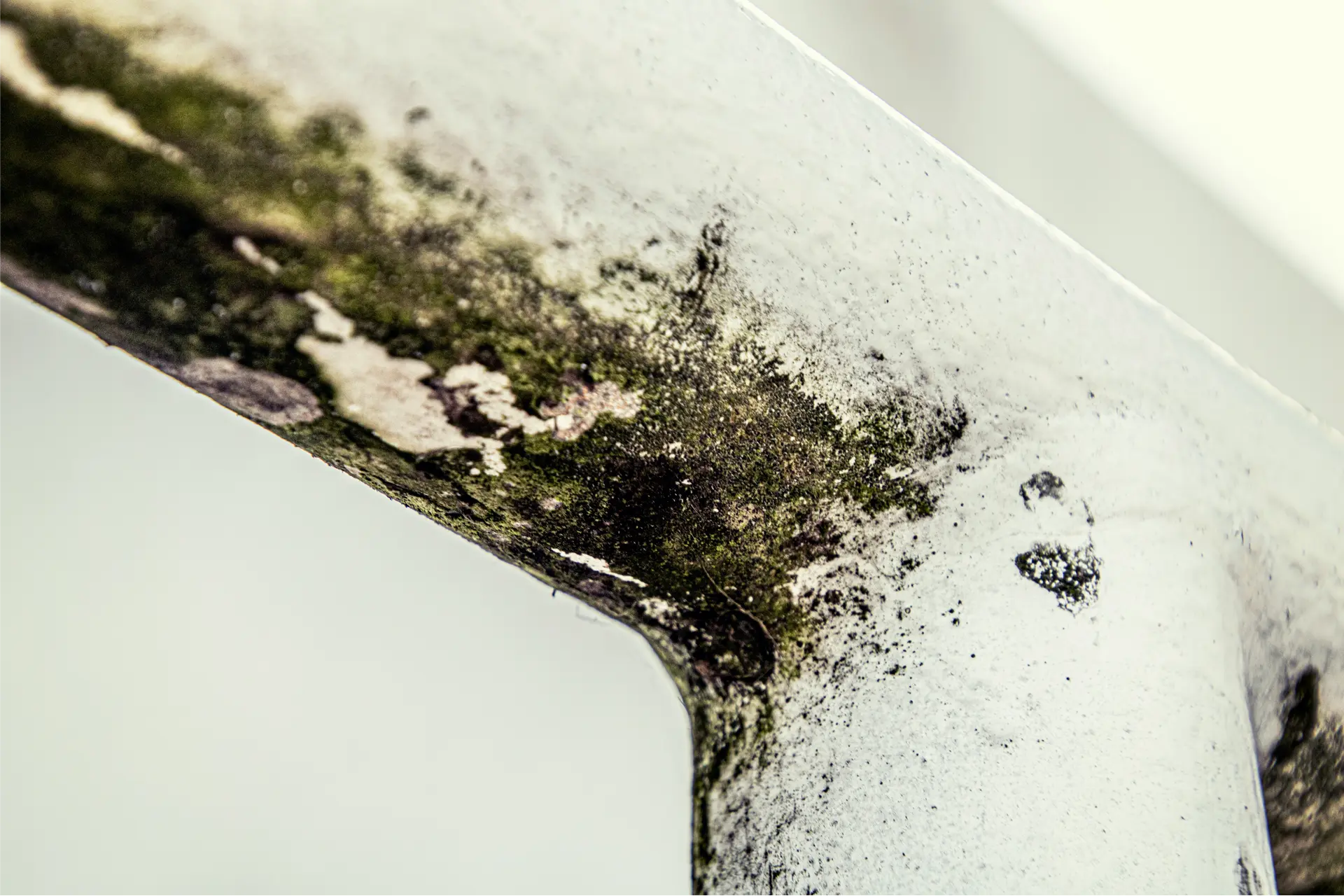
Mold is one of the most common indoor air quality concerns homeowners face, and it often shows up long before anyone realizes there’s a problem. While leaks and flooding get most of the attention, one of the biggest contributors to mold issues is something far more subtle. Poor ventilation affects how moisture moves through the home, how quickly surfaces dry, and how well indoor air stays balanced. When fresh air cannot circulate, mold gets exactly what it needs to grow.
This blog breaks down how poor ventilation encourages mold growth, why it matters for your health and home, and the practical steps you can take to prevent mold growth before it becomes a costly repair.
To understand how mold develops, it helps to know what it needs to thrive. Mold only requires three things. Moisture, organic material, and the right temperature. Since your home naturally contains organic material like drywall, dust, wood, and carpet, and since indoor temperatures often stay within mold’s comfort zone, moisture becomes the deciding factor.
Poor ventilation allows moisture to linger longer than it should. Every day tasks add humidity to your indoor environment. Cooking, showering, laundry, and even breathing all release moisture into the air. In a well-ventilated home, this moisture is carried out or diluted by consistent airflow. In a poorly ventilated home, it settles on surfaces and increases indoor humidity levels. Damp surfaces remain wet for extended periods, which opens the door for mold to develop.
Certain areas are especially prone to this problem. Bathrooms without functioning exhaust fans, basements with limited airflow, kitchens with blocked vents, and bedrooms with closed doors that trap moisture overnight often become trouble spots. Once mold begins to grow, it spreads quietly and tends to appear in hidden places such as behind furniture, along exterior walls, around windows, and inside closets.
Mold often hides in plain sight, but the early warning signs usually show up in how the home feels. Here are a few indicators that poor airflow is contributing to mold growth.
Noticing these early can help you prevent mold growth before the issue becomes widespread.
When mold begins to grow due to trapped moisture, indoor air quality quickly deteriorates. Mold releases spores into the air as it spreads. In a space with poor ventilation, spores circulate continuously instead of moving out of the home. Families may begin to experience coughing, congestion, headaches, or irritated skin. Those with asthma or allergies often feel symptoms first.
Children, older adults, and individuals with respiratory conditions are more sensitive to mold exposure. Since poor ventilation traps both moisture and airborne contaminants, the health impact can be more significant than homeowners realize. Improving ventilation protects both the home’s structure and the people living in it.
Improving ventilation does not always require a major renovation. Small adjustments can significantly reduce moisture and the chances of mold development. Here are practical ways to prevent mold growth in areas most susceptible to humidity.
Making ventilation part of your regular maintenance routine is one of the simplest ways to prevent mold growth long-term.
If mold keeps returning even after improving ventilation, or if large areas show visible growth, it may be time to call a professional. Persistent mold often signals a combination of issues such as structural leaks, clogged vents, or hidden moisture pockets. A thorough assessment can identify the root cause and provide a plan to correct it before the damage becomes more extensive.
A professional evaluation is also recommended after a remodel, basement finishing, or any work that changes how air moves through the home. Many homeowners do not realize that sealing up spaces for better efficiency can unintentionally restrict airflow and trap moisture inside.
Poor ventilation may not seem like a major concern at first, but it plays a significant role in your home’s overall health. Moisture that cannot escape quickly becomes a breeding ground for mold, and once mold settles in, it is difficult to remove without addressing the airflow problems that caused it.
By improving circulation, monitoring humidity, and staying mindful of how daily habits impact moisture, you can prevent mold growth and maintain better indoor air quality. A healthy home begins with the air you breathe, and proper ventilation is one of the most important steps toward protecting your family and your space.

At Farsight Management we understand that not all indoor air quality companies are created equal.
We feel that it is imperative to educate ourselves, our employees, and our customers. You can trust that we follow all the national standards in regards to indoor air quality. This includes mold remediation, lead abatement, asbestos removal, and everything that we do.