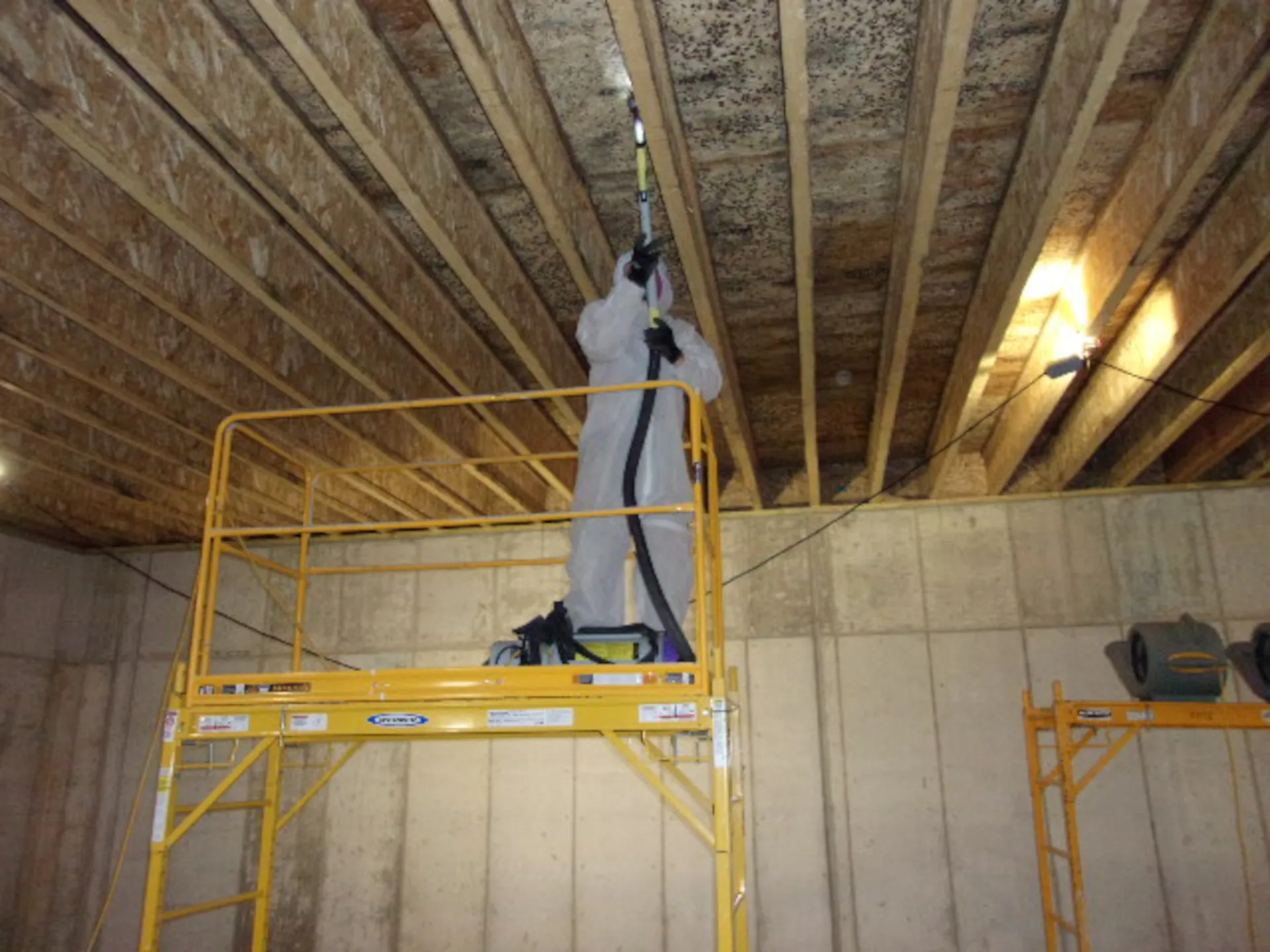
Have you noticed green mold appearing in your basement, bathroom, or around windows as the weather gets cooler?
Fall in Ohio averages nearly 6 inches of precipitation in October and November combined. With that much moisture, it’s a good time to check your basement, crawl space, and other areas where water can get in. Mold can begin growing on damp materials within 24-48 hours after water damage.
While green mold can develop at any time of the year, fall introduces several moisture problems homeowners may not have dealt with during the summer.
Understanding where that moisture comes from is the first step toward preventing a small mold problem from becoming a much larger one.
Ohio's fall weather can create ideal conditions for mold growth. Frequent rainfall, cooler temperatures, and increased moisture around foundations can leave basements, crawl spaces, and other areas of the home damp for extended periods.
Mold needs moisture, a food source, and time to grow. Materials like wood, drywall, and dust already provide food sources, so moisture is often the deciding factor. When these materials remain wet for more than 24–48 hours, mold growth can begin.
Green mold is one of the problems homeowners may notice as these conditions develop. Understanding what causes it, how to recognize it, and when to take action can help you address the problem before it spreads.
"Green mold" isn't one specific type of mold. It's a general term homeowners often use for mold growth that appears green or greenish.
Several types of mold can have a green appearance, and color alone isn't enough to identify exactly what is growing in your home.
That's an important distinction. You shouldn't assume mold is harmless or dangerous simply because of its color. Instead, ask why it's growing, how much area it affects, and what needs to happen to fix the underlying moisture problem.
Basements are one of the first places homeowners may notice problems during a rainy fall.
Repeated rainfall saturates the soil surrounding a foundation. If a home has drainage issues, foundation cracks, or inadequate waterproofing, moisture may eventually find its way inside.
You might notice:
Even if you don't see standing water, elevated moisture can still create conditions that support mold growth.
If green mold keeps coming back on basement walls, stored belongings, or other surfaces., it’s a sign that moisture is still reaching, whether through seepage, high humidity, or condensation. Recurring growth can also mean mold is present in places you can’t see: behind drywall or within porous materials, where surface cleaning won’t reach.
Some indoor mold problems actually begin outside the home.
Fall leaves and debris can clog gutters, causing rainwater to overflow rather than move through the downspouts. If that water collects near the foundation, it can contribute to basement or crawl space moisture.
Downspouts that discharge too close to the house can cause similar problems.
Keeping gutters clear and directing water away from the foundation are simple steps that can help reduce unnecessary moisture around your home.
Rain isn't the only fall moisture source.
As outdoor temperatures drop, warm indoor air can meet colder surfaces and create condensation. You may notice this most often around windows, exterior walls, bathrooms, or other poorly ventilated areas.
Occasional condensation isn't automatically evidence of a mold problem. However, surfaces that remain damp repeatedly can create conditions where mold can develop.
This is especially important as homeowners close windows and rely more on heating systems. Less fresh-air circulation can change how moisture behaves inside the home.
Crawl spaces are another area where fall moisture can go unnoticed.
Water intrusion, high humidity, exposed soil, or inadequate ventilation can allow moisture to accumulate beneath the home. Because most homeowners rarely enter their crawl spaces, the problem may continue for months before anyone realizes it's there.
A musty odor upstairs can sometimes be one of the first signs that something needs further investigation.
If you smell something unusual but can't locate the source, don't assume that everything is fine simply because you can't see mold in your living space.
Finding green mold in your home doesn't always mean you're facing a major remediation project. The next steps depend on how much mold is present, where it's growing, and what's causing the moisture problem.
For small areas of surface mold, cleanup may be manageable once the moisture source has been corrected. However, larger areas, recurring growth, or mold affecting drywall, insulation, and other porous materials may require professional evaluation.
Before focusing on cleanup, it's important to find out where the moisture is coming from. During Ohio's fall months, a few common areas are worth checking:
Removing visible mold is only part of the solution. If the underlying moisture problem isn't addressed, the mold can return.
If you're dealing with recurring mold or aren't sure how far the problem has spread, Farsight can help determine the appropriate next steps.
For more information on preventing moisture problems throughout your home, read Farsight’s Mold Prevention and Moisture Control Guide.
Green mold usually signals that conditions in an area allow mold to grow. Simply wiping away visible growth doesn't tell you why it appeared in the first place.
At Farsight, we focus on understanding the environment behind the problem. An assessment can help identify moisture sources, evaluate suspected mold growth, and determine whether additional action is necessary.
If rainy fall weather has brought musty odors, recurring green mold, or unexplained moisture into your home, getting answers now can help you address the source before another season begins.

At Farsight Management we understand that not all indoor air quality companies are created equal.
We feel that it is imperative to educate ourselves, our employees, and our customers. You can trust that we follow all the national standards in regards to indoor air quality. This includes mold remediation, lead abatement, asbestos removal, and everything that we do.